
Diablo IV Gear Guide: When to Keep, Salvage
Sep-15-2026 PST
Why a Sorting Routine Beats a Fixed Salvage Ratio
A full inventory in Diablo IV becomes manageable once you separate equipment you may actually use from items you are comfortable losing. The routine in this guide is practical editorial advice for sorting gear, not a claim that every character should follow one fixed salvage ratio. Your build, stored crafting materials, available gold, and plans for your next session determine which choice is useful for you. That means the same item can deserve different treatment on two different characters, or even on the same character across a season. The goal is a shorter, more predictable inventory stop rather than a debate over every single drop.
How Do You Decide Which Gear to Keep?
Compare a potential replacement with the equipment in your current build before deciding where it goes. Read the affixes and the item's special effect; an attractive headline item-power number alone does not establish that a piece improves your character. Keep a promising item aside while you make that comparison instead of scrapping it on the spot. Apply the same caution to an unfamiliar Unique or an item intended for another build you are planning. Keep things for a concrete reason, rather than keeping every duplicate indefinitely — a duplicate with no defined role in your build or in a recipe you actually intend to use does not become more valuable sitting untouched for another week.
Why Should You Check the Codex of Power Before Scrapping a Legendary?
Blizzard's Loot Reborn explanation describes salvaging Legendary equipment to store or improve its Aspect in the Codex of Power. Before disposing of a Legendary, check the Aspect itself and the upgrade indication shown in your current game client. The comparison that matters is the Aspect's roll against your current Codex entry — not a blanket rule assuming the highest item-power duplicate always carries the best Aspect. A piece that upgrades your collection deserves a deliberate decision even when you never plan to equip it. The division of labor is simple: the Blacksmith handles salvage, while the Occultist is where you use the resulting powers for imprinting.
Salvage or Sell: Which Resource Do You Need Right Now?
Once an item is ruled out as something to use or keep, the decision becomes a resource-planning question. Salvage is the materials route; selling is the gold route. Compare your immediate need for crafting materials with your need for gold, and check the current vendor interface for the actual return rather than relying on an old season's numbers. This is a planning choice, not a promise that one option has a universally better return. Pause before disposing of rare or unfamiliar items whose current crafting use you have not checked. The table below condenses the decision into quick checks.
| What you found | Check first | Practical next step |
|---|---|---|
| Possible equipment upgrade | Affixes, special effect, build fit | Set aside and compare before disposal |
| Legendary with a Codex upgrade indication | Aspect roll vs. current Codex entry | Consider salvaging for the upgrade |
| Unwanted gear when materials are short | Current salvage information | Salvage gear you have already reviewed |
| Unwanted gear when gold is the need | Vendor value and any other use | Sell reviewed items you do not need |
| Unique or possible crafting input | Current recipe or planned build use | Keep temporarily until that use is clear |
What Does a Repeatable Town Routine Look Like?
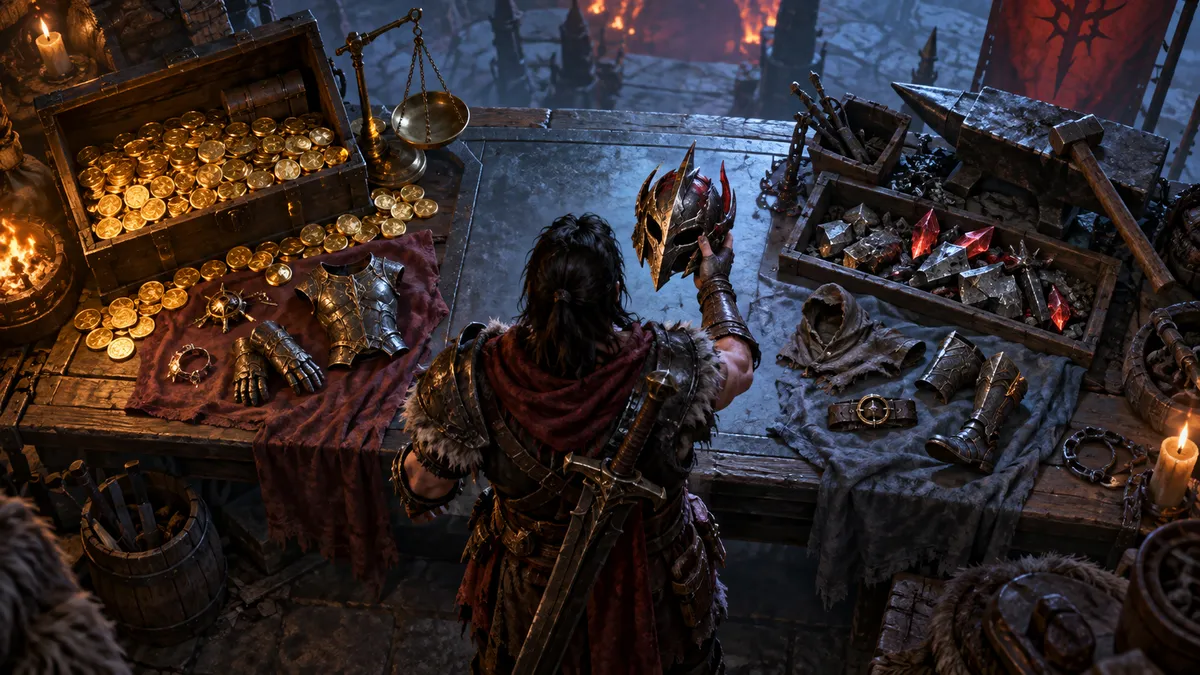
A consistent sequence turns inventory cleanup into a short stop instead of a long deliberation:
- Put possible upgrades and deliberate keeps aside.
- Check Legendary Aspects against your Codex of Power.
- Review unfamiliar Uniques and any planned crafting inputs.
- Choose materials or gold for the remaining unwanted equipment.
- Inspect the selected items again before confirming a destructive action.
- Leave with space for the next activity and a short list of what you are looking for.
A small holding area for undecided items can help, provided you actually revisit it. Keep your sorting criteria simple enough that you can apply them consistently every time you return to town, so the routine survives contact with a full bag of loot.
How Does the Loot Filter Reduce Repeated Comparisons?
Blizzard's Lord of Hatred overview documents a loot filter with item criteria, including a Codex upgrade check. Use the options available in your client to highlight what matters to your current goals. Begin conservatively and test changes against equipment you already understand before making the filter more restrictive. A filter helps direct your attention; it does not replace reading an unfamiliar item or deciding what to salvage. Revisit your filter choices whenever you change builds or begin pursuing a different crafting goal.
Which Details Change Between Seasons and Expansions?
Crafting questions in Diablo IV are version-dependent. Expansion requirements, seasonal currencies, item-power thresholds, and material quantities can all shift between patches, so treat any figure from an older guide as a starting point rather than a settled fact. For a current crafting question, check the live recipe in your client and the current official notes. The durable part of the routine — protect real upgrades, verify Codex upgrades before scrapping Legendaries, then convert the rest into the resource you need — holds up even when the specific numbers move. Combining an in-client check with official patch information keeps your decisions aligned with the version you are actually playing.
FAQ
Should every Legendary be kept? No single keep rule suits every build. Compare the item's equipment value, its Aspect, and any concrete planned use, then make a deliberate choice.
Should every unwanted item be salvaged? No. Decide which resource you currently need, after checking that the item has no use you would regret losing. This routine does not prescribe a permanent salvage-versus-sell percentage.
Can an old guide settle a current crafting question? Check the live recipe and the current official notes. Treat expansion requirements, seasonal currencies, item-power thresholds, and material quantities as version-dependent details.
Where do I salvage and where do I imprint Aspects? The Blacksmith handles salvage, and the Occultist is where you use stored powers for imprinting, per Blizzard's Loot Reborn explanation.
Does a higher item power mean a better Aspect? Not necessarily. The relevant comparison is the Aspect's actual roll against your current Codex of Power entry, not the item's headline power number.